
No matter how big or small your business, whether you are consumer-focused or a B2B service provider, you will benefit from developing and maintaining a consistently recognisable brand. In the age of AI, whether launching a new brand or sustaining something more established, there are some unique challenges to be faced.

This post has been a long-standing favourite for many years and while the fundamentals haven’t changed, it’s now 2026 and much has changed, so we’ve updated it to reflect the new challenges and opportunities that AI has introduced for businesses trying to maintain a consistent brand.
A brand refers to a collection of interlinked attributes, including things like your core business values, your unique selling points and your goods and services.
Effectively conveying this varied set of attributes depends on you actively demonstrating and reflecting your brand values in everything that you do, from your advertising through to the experience a customer has when they pick up the phone to talk to you or walk into your office. This gives your business an identity.
A successful brand helps to communicate what you’re all about, including what sets you aside from your competition and should be applied consistently across everything you do.
Over the years I’ve lost count of the number of businesses getting this wrong. From old logos that don’t match on social media pages to tag lines and mission statements that read differently depending on where you look.
Inconsistency like this might seem pretty inconsequential, but for customers, this inconsistency can raise a red flag, making them question not only the legitimacy and trustworthiness of a business but their professionalism too.
Research cited in Management in the Digital Age found that a coherent brand presentation across all platforms can increase revenue by up to 23% – and while the landscape has shifted considerably since that was published, the underlying principle has only become more relevant.
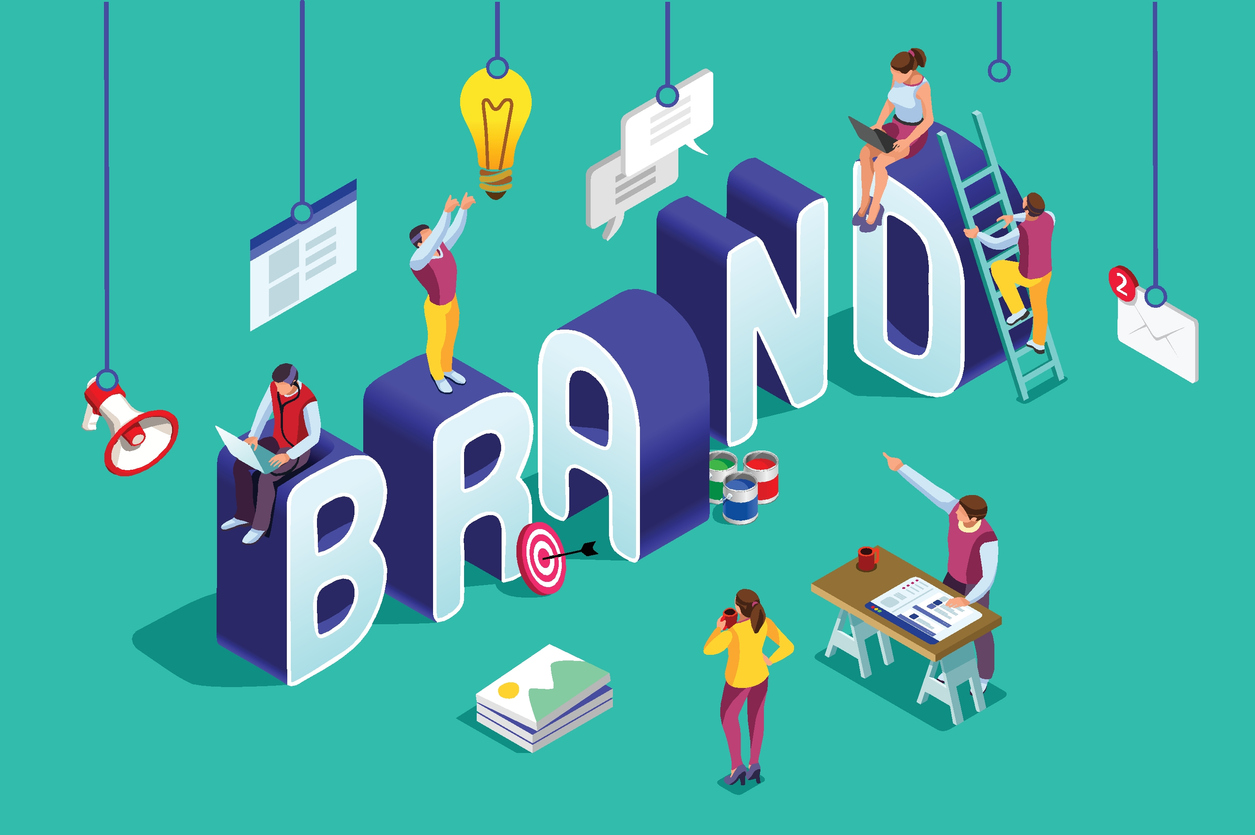
The Benefits of Branding
- Helps you to differentiate your business, making you stand out in your customer’s mind
- Gives your business a personality and identity that people can relate to
- A strong brand can command instant engagement
- Effectively delivers and reinforces your brand values and other key messaging
- Drives authority and trust in your business
- Drives customer loyalty and brand evangelism
- Helps you to position your brand in a way that supports your value proposition and pricing strategy
Defining Your Brand
When you think about all of the individual aspects that combine to make your business, pulling them all together and highlighting key differentiators will help you to define your brand.
Remember too that your brand is continually reinforced through all of your customer-facing messaging, from your business cards, email marketing, social media posts and website content through to your logo, signage and print collateral – Every single potential touchpoint needs to carry consistent branding in order to effectively build trust.
Brand Consistency at Every Touchpoint
Ensuring that both your messaging and visual branding is clearly and consistently applied across all communication channels is critical, as strong consistent branding reinforces your identity and drives positive sentiment and trust.
What Does This Mean For Your Business?
Consistent use of your logo, brand colours and key messaging across all channels is important. Don’t forget things like old Yell or Google Business listings too, especially if you have re-branded since launching or your brand has evolved and changed in any way.
Strive for visual cohesion
Consistency doesn’t mean that all of your communications have to look exactly the same, far from it, but it does mean that you should strive for visual cohesion. Make sure you stick to a number of standards, such as your colour palette, visual style, font and size and spacing of your logo and produce a brand guidelines document that can be provided to anyone that might need it, for example, web design, advertising or print companies you might want to work with.
Brand Guidelines
Developing a set of brand guidelines is a natural progression as a brand begins to establish itself and it gives any service providers you work with, a blueprint to adhere to.
Your branding guidelines need not be complex (I’ve come across branding guidelines for some big international names over 70 pages long), a simple document detailing colours, fonts and some basic styling information will generally be sufficient.
Keep your visual identity and key messaging consistent and you’ll effectively develop and strengthen your brand, helping your business make a far stronger, longer-lasting impression.
Brand Consistency in the Age of AI
AI has made it easier than ever to produce content at volume. It has also made it easier than ever to quietly undermine your brand without really noticing, and that tension is something every business needs to be aware of, particularly as your customer base becomes increasingly alert and in many cases, suspicious of obvious AI content.
The tools themselves are not the problem. Used thoughtfully, AI can genuinely support brand consistency, helping you produce more content more quickly, maintain a coherent tone across channels and keep visual standards high without the cost of constant product shoots and extensive editing. But used carelessly – and it is being used carelessly, constantly, by a lot of businesses – the results are doing real damage to the brands they’re supposed to be serving.
The tell-tale signs are everywhere once you start looking
Social media is full of it. Templated Reels and TikToks with jarring transitions that bear no relation to the brand using them. Stock sound effects and trending audio that clash with the vibe of the visuals. AI-generated graphics that look vaguely professional at a glance but, at best, slightly off in a way that’s hard to put your finger on. The businesses posting this content often have no idea how it reads to their audience – but their audience notices, and there’s a growing contingent of consumers, refusing to shop with businesses using obvious and sloppy AI.
Copy is another area where the cracks show. Remember a decade ago and content was being outsourced to writers working cheaply, for whom English was not their first language? There was vast amount of very poor quality content, purchased in good faith, but published without businesses bothering to check.
Ultimately this low quality content damaged websites once the Google algorythm caught up, and whilst the output of well prompted AI often isn’t comparably bad, AI writing isn’t always great, and even when it is, it can fail to remain faithful to the usual tone of your brand which can feel jarring.
AI copy has a tendancy to default to certain phrases, follow a certain rhythm, a display a relentless kind of enthusiasm that starts to feel hollow the more you see it. When it’s not been properly edited, briefed or checked against a brand voice, it reads like it was written by someone who vaguely knows what your business does but hasn’t really thought about who they’re talking to. For a brand that has spent years building relationships with its customers, that’s a problem.
Then there are the product images. AI image tools have come a long way and, as we covered in our Shopify Magic piece, they can provide genuine value, but they require a careful eye. AI-generated product shots can produce results that look fine at thumbnail size and fall apart on closer inspection.
Label text that doesn’t quite make sense, reflections that don’t add up, edges that blur into the background in an unnatural way, or visual inconsistencies that creep in when images haven’t been checked properly before going live. On a product page, details like this erode trust in exactly the way inconsistent branding always has – even when customers may not be able to articulate what’s wrong, something just feels off.
Real opportunities exist when expertly utilised
A well-defined set of brand guidelines has always been the foundation of consistent branding. In the age of AI, it becomes something more – an agentic brief. The clearer and more detailed your guidelines are, the better the starting point you give any AI tool you’re using, and the less revisions you’ll need. Businesses that have invested properly in defining their brand voice, visual identity and standards are better placed to use AI well and that’s where expert support becomes invaluable.
The other thing that hasn’t changed, is that someone still needs to review everything before it goes out. AI hallucinations happen, frequently, making fact, sense and tone checking critical and only a human can do that. AI doesn’t know if a logo placement looks awkward on a mobile device, or whether the copy it just generated is incorrect.
Attention to detail, editorial judgement and an understanding of what your audience wants and what your brand actually stands, for are all valuable skills that AI can not replace. They’re what makes the difference between AI content that builds your brand and soulless and uncanny AI content that quietly chips away at it.
Need Some Help?
Do you need a helping hand with your visual identity and marketing? Wondering how to get the most out of AI or need a comprehensive agentic brief creating? Our expert team are here to help, get in touch with us now tor give us a call on 0845 301 1181 to find out what we can do for you.